


It really came from a mix of my own life experiences and watching the world get more fragile.
Living on the Olympic Peninsula in Washington, I got deep into practical prepping. I’ve interviewed preppers from every background. What kept striking me was how often the conversation came back to the same truth: gear alone isn’t enough. Real survival depends on community, adaptability, and ordinary people choosing to work together when systems collapse.
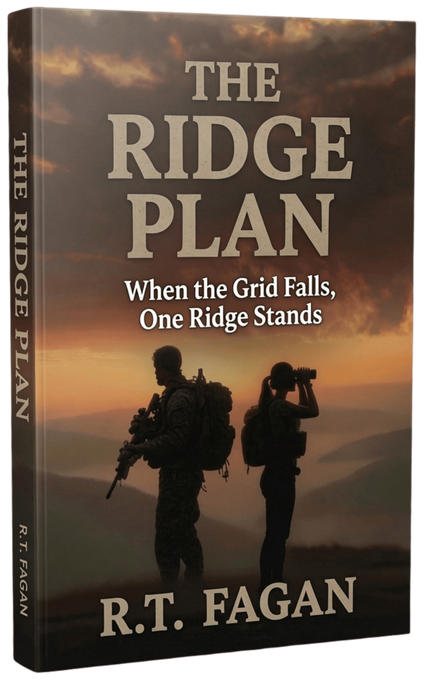
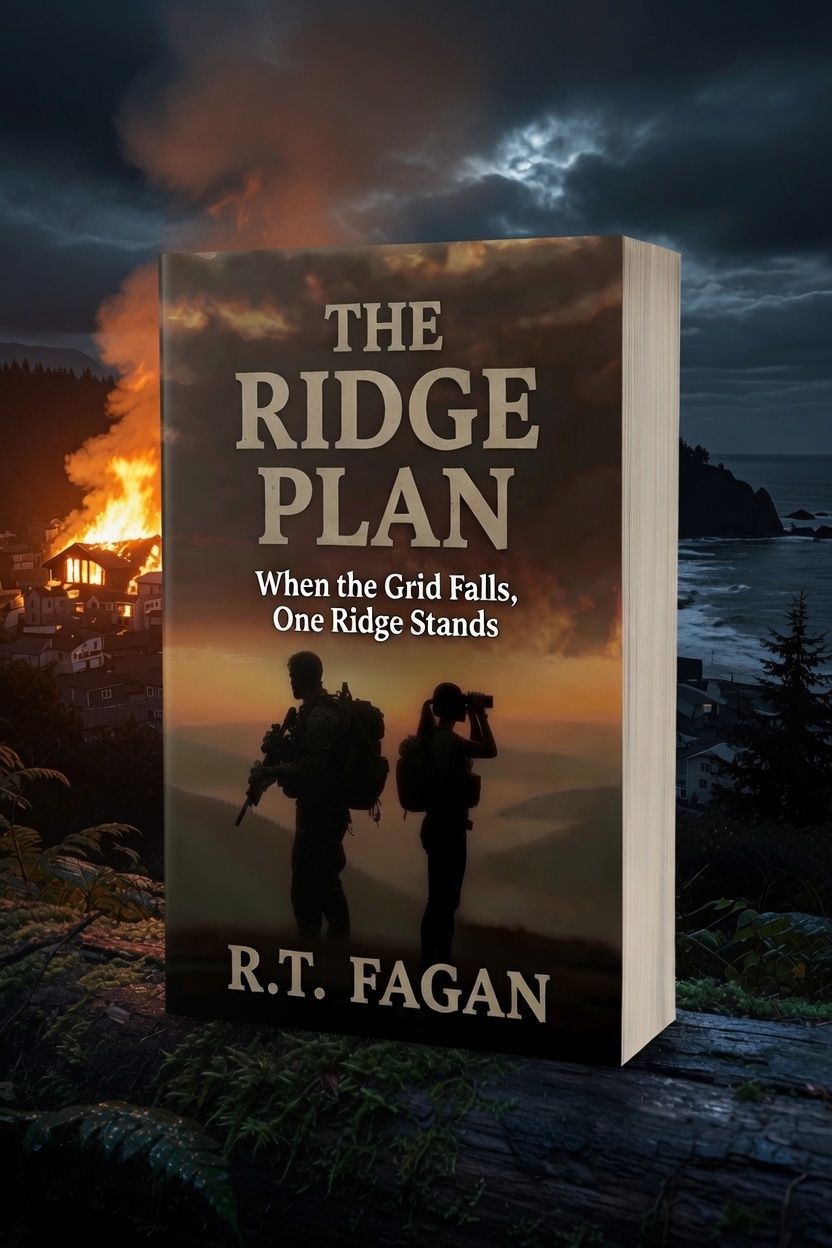
The Ridge Plan was my way of exploring that question: What happens on Day One when the power goes out nationwide — not in theory, but in a real neighborhood with real people who have flaws, skills, fears, and strengths? I wanted to show the tactical side (power, water, comms, security) but also the human side — leadership, trust, sacrifice, and moral decisions under pressure.
At its core, the book is about turning preparation into something bigger: building a community that can actually hold the line.