The Best Three Ways to Purify Water in a Survival Situation
Clean drinking water is non-negotiable in any grid-down or emergency scenario. The human body can last only about three days without it. When municipal systems fail, knowing how to source and purify water safely can mean the difference between life and death.
Here are the three best, most reliable purification methods, expanded with practical storage guidelines and common mistakes to avoid.
1. Boiling (Most Reliable Biological Purifier)
Why it ranks at the top: Boiling kills bacteria, viruses, and most parasites (including Giardia and Cryptosporidium) effectively.
How to do it right:
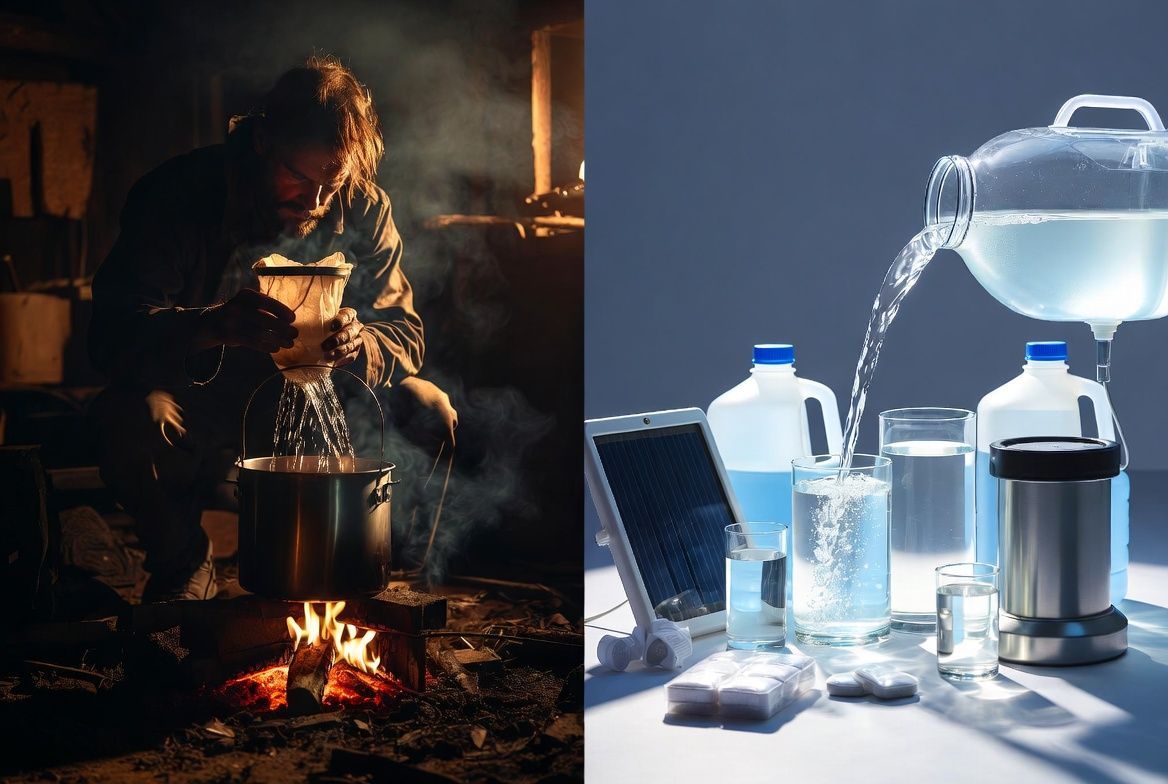
- Pre-filter cloudy water through a clean cloth, coffee filter, or bandana to remove sediment.
- Bring water to a rolling boil for 1 minute (3 minutes at elevations above 6,500 ft).
- Allow it to cool naturally before storing.
Storage Guidelines:
- Store boiled water in clean, food-grade containers with tight-fitting lids.
- Glass jars, stainless steel bottles, or heavy-duty PET plastic (marked with recycling #1) work well.
- Label containers with the date boiled.
- Use within 3–6 months for best quality. Rotate stock regularly.
- Keep stored water in a cool, dark place away from chemicals or gasoline.
Common Mistakes:
- Not boiling long enough (especially at altitude).
- Re-contaminating clean water with dirty hands or utensils.
- Assuming boiling removes chemical contaminants or heavy metals (it doesn’t).
2. Filtration + Chemical Treatment (Best All-Around Long-Term Method)
Why it’s excellent: Mechanical filtration removes particles, bacteria, and protozoa, while chemical treatment kills viruses that many filters miss.
Recommended Process:
- Filter first using a quality system (Sawyer Squeeze, Berkey, LifeStraw, Katadyn, etc.). Aim for 0.1–0.2 micron rating.
- Treat with unscented household bleach (5–6% sodium hypochlorite) or purification tablets.
Bleach Dosage (after filtering):
- Clear water: 2 drops per quart — wait 30 minutes.
- Cloudy water: 4 drops per quart — wait 30 minutes. Water should have a slight chlorine smell. If not, repeat the dose and wait another 15 minutes.
Storage Guidelines:
- Store treated water in the same clean, sealed containers as above.
- Bleach-treated water is best used within 6 months, though it can last longer if stored properly.
- For long-term bulk storage (55-gallon drums or larger), add the proper amount of bleach at filling time and test periodically.
- Keep a dedicated “clean water” area separate from untreated sources.
Common Mistakes:
- Using expired or low-concentration bleach.
- Skipping the filtration step with cloudy water (chemicals are less effective).
- Not waiting the full contact time.
- Storing water in containers that previously held milk, juice, or chemicals.
3. Distillation (Best for Contaminated or Chemical-Laden Water)
Why it’s powerful: Distillation removes nearly everything — biological threats, heavy metals, chemicals, salts, and radioactive particles.
Simple DIY Method:
- Boil water in a large pot with a slanted lid.
- Collect condensed droplets that run down the lid into a clean container.
- For better efficiency, use copper tubing or a dedicated solar still.
Storage Guidelines:
- Distilled water is very pure but lacks minerals. Consider adding a pinch of salt or electrolyte powder for long-term consumption.
- Store in glass or high-quality stainless steel for longest shelf life.
- Properly stored distilled water can last indefinitely, but rotate every 1–2 years for peace of mind.
Common Mistakes:
- Collecting water too quickly (before it fully condenses and purifies).
- Using plastic containers that can leach chemicals into pure distilled water.
- Assuming all stills remove 100% of contaminants without proper maintenance.
General Water Storage Guidelines (Critical for Preparedness)
- Quantity: FEMA recommends 1 gallon per person per day (minimum 3 days, ideally 2–4 weeks or more).
- Containers: Use food-grade only. Avoid milk jugs or containers that held non-food items.
- Location: Cool, dark, away from direct sunlight and temperature swings.
- Rotation: Use and replace stored water every 6–12 months.
- Testing: Consider a basic water testing kit for stored supplies.
- Label everything with contents and date.
Top Common Water Purification Mistakes
- Assuming clear water is safe — Clear water can still be full of harmful microbes.
- Using pool bleach or scented laundry bleach — Only unscented household bleach (5–6%) is safe.
- Poor container hygiene — Dirty storage containers re-contaminate purified water.
- Over-reliance on one method — Always have backups.
- Ignoring taste — Bad-tasting water leads to dehydration because people won’t drink it. (Aerate or add electrolytes if needed.)
- Forgetting fuel/chemical reserves — Plan for long-term use, not just 72 hours.