Building Resilient Ham Radio Communications for SHTF: Relationships First, Then Plans and OPSEC
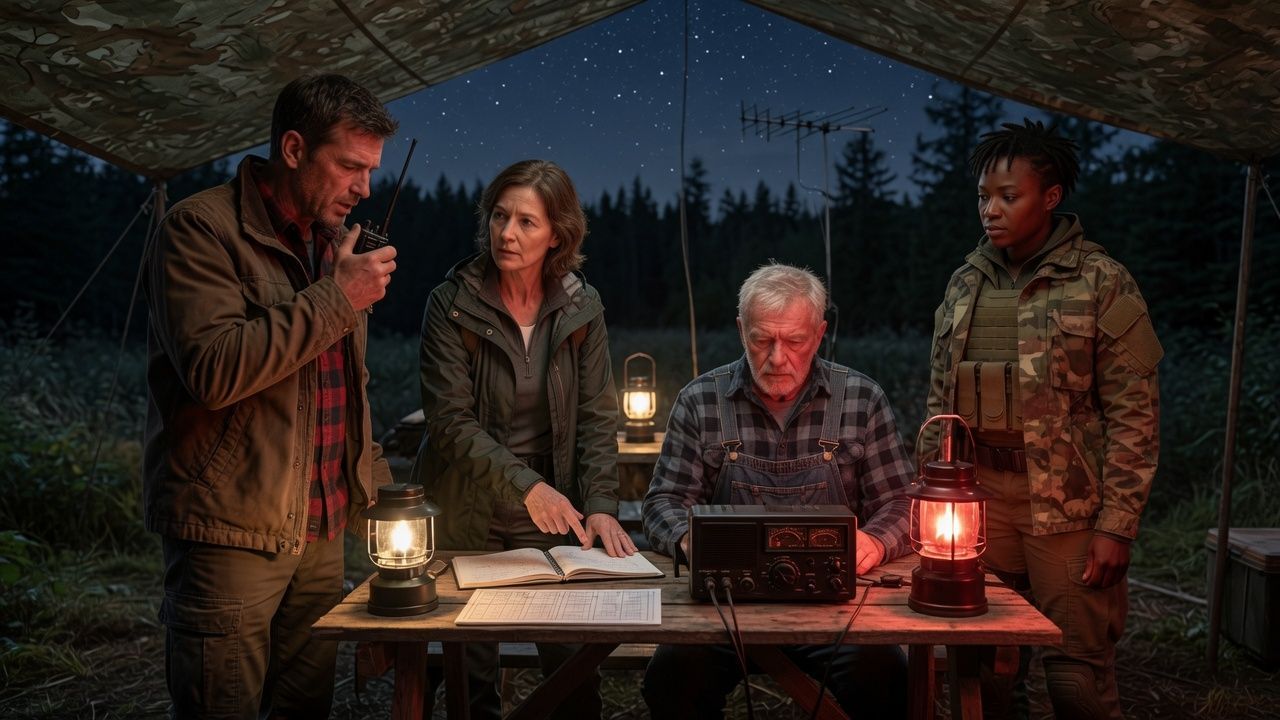
Owning radios is the easy part. In a grid-down or high-tension scenario, the difference between useful communications and broadcasting your location and intentions to anyone with a scanner comes down to three things: the relationships you’ve already built, a written and practiced communications plan, and disciplined operational security (OPSEC). Gear sitting on a shelf is just inventory. A functioning network of people who know each other, share protocols, and understand the risks is actual capability.
This article focuses on actionable steps you can take now. It assumes you either already have a Technician-class license or are willing to get one—the foundation for legal, effective operation on the most useful local bands.
1. Get Licensed and Plug Into the Existing Network
A license is not bureaucracy; it is access. Unlicensed operators transmitting on amateur frequencies while the grid is still up are broadcasting blind. They miss local net schedules, repeater tones, and the community knowledge that licensed operators have built over years.
Actionable steps:
- Study free online at HamStudy.org or the ARRL materials. The Technician exam is 35 multiple-choice questions.
- Locate a volunteer examiner (VE) session near you via the ARRL website or local club listings.
- Once licensed, program these national FM simplex calling frequencies into every radio in your group: **146.520 MHz** (2 meters) and **446.000 MHz** (70 cm). These are the default first-contact channels when repeaters fail.
- Find your local Amateur Radio Emergency Service (ARES) or Radio Amateur Civil Emergency Service (RACES) group. Start at arrl.org/sections, contact your Section Emergency Coordinator, or search
ARES.” Many groups also appear on RepeaterBook.com net listings.
- Join or at least attend meetings of your nearest amateur radio club. Most have ARES liaisons.
Dual membership in ARES and RACES is often recommended because it gives flexibility: ARES can activate more broadly; RACES operates under civil-defense authority when officially activated.
2. Cultivate Relationships Before You Need Them
Radios do not create trust. People do. In an emergency you want known voices, not strangers calling on 146.520.
Actionable steps:
- Check into local weekly nets regularly. Listen first, then participate. Consistency builds familiarity.
- Volunteer for public-service events (parades, races, community drills). These are low-stakes ways to practice net discipline and meet operators.
- Identify a small trusted circle (family, close neighbors, or prepper-oriented hams) and begin private conversations offline about mutual support. Do not discuss detailed capabilities or locations over the air or on social media.
- Expand carefully. Local ARES/RACES nets and clubs are the primary feeder system. Groups such as AmRRON maintain national-level Signals Operating Instructions (SOI) and nets that many preparedness-minded operators use; their materials emphasize standardized frequencies, schedules, and reporting formats.
- Educate your immediate family or group about OPSEC. Casual comments about “our radios and solar” or antenna farms can undermine everything.
The single most important long-term action is becoming a known, reliable participant rather than a stranger who appears only when things are bad.
3. Write and Distribute a Group Communications Plan (SOI)
A Signals Operating Instructions document is your group’s playbook. Every member should have a laminated, written copy (digital copies can fail with power).
Core elements to include:
- PACE structure adapted to radio:
- Primary: Local simplex or known repeaters (VHF/UHF).
- Alternate: Different band or secondary simplex frequencies.
- Contingency: HF if licensed and equipped (e.g., 40 m or 80 m NVIS for regional), or digital modes such as JS8Call or Winlink.
- Emergency: Non-radio (runners, visual signals, pre-arranged meeting points).
- Scheduled check-in windows (example: 0700 and 1900 local) so no one monitors continuously and drains batteries.
- Primary and backup frequencies, including local repeater pairs with tones (pull these from RepeaterBook.com now).
- Call signs or agreed tactical identifiers, plus a simple authentication challenge-response (pre-arranged question/answer or code word that changes on a schedule).
- Brevity rules and pre-arranged plain-language phrases for status (legal on amateur bands as long as they do not obscure meaning).
- Authentication and duress procedures.
- Power and antenna expectations.
Actionable steps:
- Sit down with your core group and draft the plan on paper.
- Program every radio identically with the same memory channels.
- Review and update the plan quarterly or after any major change in membership or gear.
- Keep the SOI itself OPSEC-sensitive: do not email unencrypted copies or discuss its details on open nets.
Organizations such as AmRRON publish detailed SOIs that many use as templates for national and regional coordination; local groups can adapt the same principles to shorter ranges.
4. Practice Strict OPSEC on the Air
Amateur radio is an open medium. Encryption and secret codes intended to obscure meaning are prohibited under FCC Part 97. What remains effective is discipline.
Key practices:
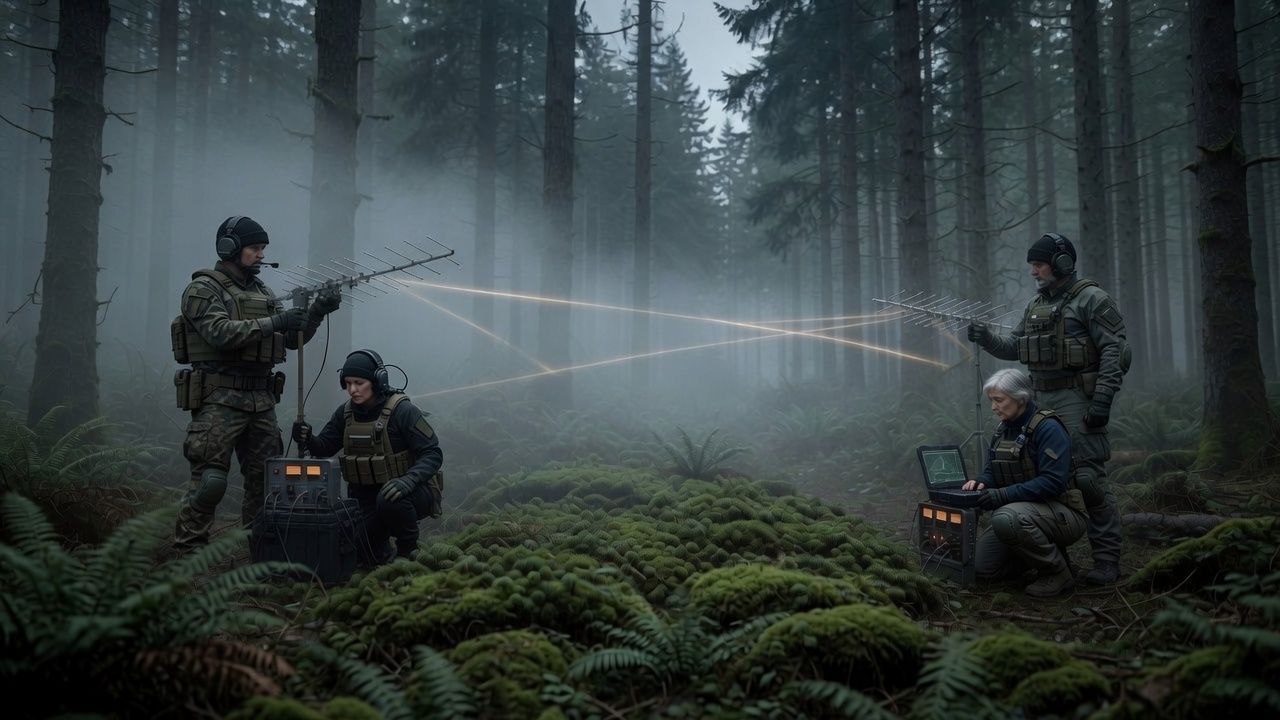
- Keep transmissions short and information-dense. Every second on the air reveals presence and approximate location via direction-finding.
- Use the lowest power that completes the contact.
- Avoid broadcasting logistical details: supply levels, exact locations, group size, or movement plans on open frequencies.
- Practice frequency agility: pre-agree on a short list of alternate frequencies and a rotation method.
- Prefer simplex over repeaters when possible for local traffic (fewer listeners).
- Use directional antennas or terrain masking when practical to limit radiation patterns.
- Assume every transmission is monitored. Speak as if an adversary is listening.
Physical OPSEC matters too: minimize visible antennas where possible, protect equipment from casual observation, and educate household members not to discuss capabilities publicly.
5. Train and Drill Regularly
Plans that are not practiced fail under stress.
Actionable steps:
- Conduct weekly or bi-weekly group check-ins on your primary frequencies using the actual SOI procedures.
- Run simple scenarios: simulated power outage, lost contact, or authentication challenge.
- Participate in larger ARES/RACES exercises and the annual Simulated Emergency Test (SET).
- Practice digital modes (JS8Call, Winlink, fldigi) if your group has the capability—they often work at lower signal levels and can be more efficient for store-and-forward messaging.
- Log what works and what breaks. Adjust the plan accordingly.
6. Gear and Power Realities (Brief)
- Start with dual-band VHF/UHF handhelds and a good antenna (a better antenna often outperforms higher power).
- Add mobile or base capability and, if licensed for General or higher, an HF radio for regional reach.
- Prioritize battery endurance and charging (solar, generators, hand-crank) over pure transmit power.
- Protect at least one radio and critical accessories in a Faraday bag or cage against EMP/CME risks if that is part of your threat model.
- Redundancy beats single expensive pieces of gear.
Quick-Start Checklist
1. Get or upgrade your license.
2. Join local club + ARES/RACES and begin checking into nets.
3. Identify 3–8 trusted local operators and begin offline relationship-building.
4. Draft a written PACE-based SOI with frequencies, schedules, and authentication; distribute laminated copies.
5. Program all radios identically and practice weekly.
6. Enforce transmission discipline and review OPSEC with every group member.
7. Rehearse the plan under realistic constraints (limited power, time pressure, simulated interference).
The radio is only a tool. The network of people who already know how to work together under a shared plan, while protecting information that does not need to be public, is the actual system. Start the relationship and planning work now—while the grid is still up and the stakes are low. When conditions change, the operators who already know each other and their procedures will be the ones still communicating effectively.